
Mosquito Season in Australia by State
By Frank Taylor, Mosquito Net Specialist. Last reviewed: July 2026.
"When does mosquito season start?" is a question with a different answer in every part of Australia. In Tasmania it's a short summer nuisance. In the Top End it never really ends. After thirty years of selling mosquito nets to customers in every state and territory, we've watched the seasonal pattern play out region by region — and it's shaped by rainfall, temperature and geography in ways worth understanding, whether you're planning travel, worrying about the kids' bedrooms, or just trying to work out when to expect the buzzing to start.
This guide walks through peak mosquito season across Australia, state by state, along with the local considerations that matter in each region. It's a general overview to help you plan — for current health warnings and surveillance updates, always check your state or territory health department, which we link at the end.
A note on what this guide is and isn't: this is seasonal and geographic context, not medical advice. Where we mention mosquito-borne illnesses, it's to explain why mosquito activity matters in a given region — not to diagnose, treat or advise on any health condition. For health advice, see your doctor or your state health department.
The short version — mosquito season across Australia
| Region | Peak mosquito season | Notable local considerations |
|---|---|---|
| Tropical north (FNQ, NT Top End, Kimberley) | Wet season, roughly November–April; mosquitoes present year-round | Highest activity after wet-season rain. Murray Valley encephalitis is endemic to the north and detected most years. |
| Queensland (south-east & coastal) | September–May, peaking after summer rain | Warm, humid coast supports long seasons. Sandflies and midges add to the mix near the water. |
| New South Wales | November–April | State health surveillance runs Nov–April. Inland river regions see higher activity in wet years. |
| Victoria | November–April, peaking mid-late summer | Northern Victoria (Murray corridor) carries higher risk in flood years. |
| South Australia | November–April | River Murray communities see elevated activity after high-flow years. |
| Western Australia | North: wet season Nov–April. South-west: summer Dec–March | The Kimberley and Pilbara are Murray Valley encephalitis watch areas most wet seasons. |
| Northern Territory | Wet season, roughly November–April; activity possible year-round | Among the highest mosquito activity in the country. Murray Valley encephalitis endemic and monitored. |
| Tasmania | December–March | Shortest, mildest season — mosquitoes are a summer nuisance more than a health concern. |
Seasons shift year to year with rainfall — a wet La Niña summer extends and intensifies the season; a hot dry one shortens it.
Why mosquito season varies so much across Australia
Three things drive mosquito activity: standing water to breed in, warmth to speed up their life cycle, and time. That's why the season follows rain and temperature so closely. A wet summer — the kind the La Niña years brought — fills every low-lying paddock, drain and wetland, and mosquito numbers explode a week or two later. A hot dry summer does the opposite.
Geography layers on top of that. The tropical north runs on a wet-dry cycle rather than four seasons, so its mosquito calendar is really just "the wet" — roughly November to April — with activity possible all year. The temperate south runs on a conventional summer peak. And the inland river systems, especially the Murray-Darling, behave differently again: they can stay quiet for years, then surge when floodwater moves through and fills the floodplains.
This is also why the same city can have a mild year and a shocking year back to back. When our Sydney customers tell us the mozzies have been "the worst I've ever seen them," it's almost always the spring after heavy winter-spring rain. The mosquitoes didn't change — the water did.
State by state
Queensland
Queensland has one of the longest mosquito seasons in the country. Along the south-east and the coast, activity typically runs September through May and peaks after summer downpours — the warm, humid climate keeps mosquitoes going for the better part of the year. In the tropical far north (Cairns, the Cassowary Coast, Cape York) there's really no off-season: mosquitoes are a year-round presence that intensifies dramatically through the November–April wet.
Coastal Queenslanders also deal with sandflies (biting midges) alongside mosquitoes, particularly near mangroves, estuaries and tidal flats. These are smaller than mosquitoes and slip through some standard netting — one reason our Queensland customers so often choose cotton, whose fibrous weave many of them tell us makes a real difference with the smaller biters.
New South Wales
NSW runs a November-to-April mosquito season, and NSW Health runs formal surveillance across those same months, testing mosquitoes for viruses and issuing warnings when risk is elevated. Coastal Sydney and the Central Coast see the classic summer nuisance mosquitoes; the inland river regions — the Murrumbidgee, the Murray, the western catchments — see higher activity and higher risk in wet years, when the rivers run high and the floodplains fill.
Sydney specifically is a good example of how much rainfall drives the picture. A dry summer passes almost unnoticed; a wet spring produces the "plague of mozzies" headlines. If you're in Sydney and wondering why some years are so much worse, the answer is almost always the preceding rain, not anything you did or didn't do around the house.
Victoria
Victoria's mosquito season runs November to April, peaking through mid-to-late summer. For most of the state mosquitoes are a summer-evening nuisance. The higher-risk zone is the north — the Murray corridor and the flood-prone country along the river — which in wet years becomes a genuine watch area. Northern Victoria has featured in recent Japanese encephalitis surveillance, and the state's health department has at times expanded free vaccination eligibility for people spending time outdoors in high-risk local government areas.
South Australia
SA's season is the standard southern November-to-April. The Riverland and the communities along the River Murray are the parts of the state where mosquito activity climbs most in high-flow years — the same floodplain-and-river pattern seen across the south-east. Adelaide and the coast see a more ordinary summer nuisance season.
Western Australia
WA is really two mosquito climates. The south-west, including Perth, runs a conventional summer season, roughly December to March. The north — the Kimberley and the Pilbara — runs on the tropical wet-dry cycle, with the wet season (November–April) driving intense activity and mosquitoes present year-round.
The northern WA regions are also the part of Australia where Murray Valley encephalitis is most consistently present — WA Health detects it in the Kimberley and Pilbara in most wet seasons, and issues travel and resident warnings accordingly. If you're heading to the Kimberley in the June–August tourist season, which follows the wet, it's worth checking WA Health's current advice before you go.
Northern Territory
The Top End (Darwin, Kakadu, Arnhem Land) runs entirely on the wet-dry cycle — the mosquito season is the wet season, roughly November to April, and activity can continue year-round in the right conditions. The NT records some of the highest mosquito activity in the country, and like the Kimberley it's a region where Murray Valley encephalitis is endemic and monitored. For travellers, the build-up and the wet (October to April) are the times to be most prepared; the dry season is markedly easier.
Tasmania
Tasmania has the shortest, mildest mosquito season in Australia — roughly December to March, and mosquitoes here are a summer nuisance rather than the health concern they can be further north. The cool climate simply doesn't support the numbers or the disease risk of the mainland. That said, a warm summer evening near still water will still produce mosquitoes, so the southern states aren't net-free by any means.
The seasonal disease picture — in plain terms
Australia is fortunate to be free of the very worst mosquito-borne diseases — malaria isn't established here, and dengue is largely limited to far north Queensland during outbreaks. But there are several viruses spread by Australian mosquitoes that are worth understanding as seasonal context, because they're the reason health departments run surveillance and issue warnings each summer.
Ross River virus is by far the most common — around 5,000 cases are reported nationally most years. It isn't fatal, but it can cause fever, rash and joint pain that lingers for weeks or months. It's found across the country, with activity following the mosquito season.
Barmah Forest virus causes a similar illness to Ross River, generally with a faster recovery. Also widespread, also seasonal.
Murray Valley encephalitis is rare but serious. It's endemic to northern Australia — the Kimberley, the Top End, north-western Queensland — and detected there most wet seasons, occasionally spreading south along the river systems in very wet years. Most infections cause no symptoms, but a small proportion become severe.
Japanese encephalitis became established in mainland Australia in 2022 and now appears seasonally (roughly October–April) in parts of the south-east and inland, with year-round potential in the tropical north. A vaccine exists, and state health departments have run targeted vaccination programs in high-risk areas.
The consistent public-health advice for all of these is the same, and it's not complicated: reduce mosquito bites. Health authorities recommend covering up, avoiding peak biting times around dawn and dusk, using an effective repellent, and using physical barriers — including mosquito nets — particularly where you sleep. A mosquito net is one part of that picture: it protects you through the night, when you can't be applying repellent or watching the clock.
To be clear about what a mosquito net does: it's a physical barrier that keeps mosquitoes away from you while you sleep. It is not a medical device and does not treat or prevent any disease on its own. It works alongside the public-health measures above, not instead of them. For health advice and current warnings, see your state health department.
How a mosquito net fits into the seasonal picture
Repellent wears off. Long sleeves come off when you go to bed. Dawn and dusk are exactly the hours you're asleep. That's the gap a bed mosquito net fills: uninterrupted physical protection through the night, every night of the season, with nothing to remember or reapply.
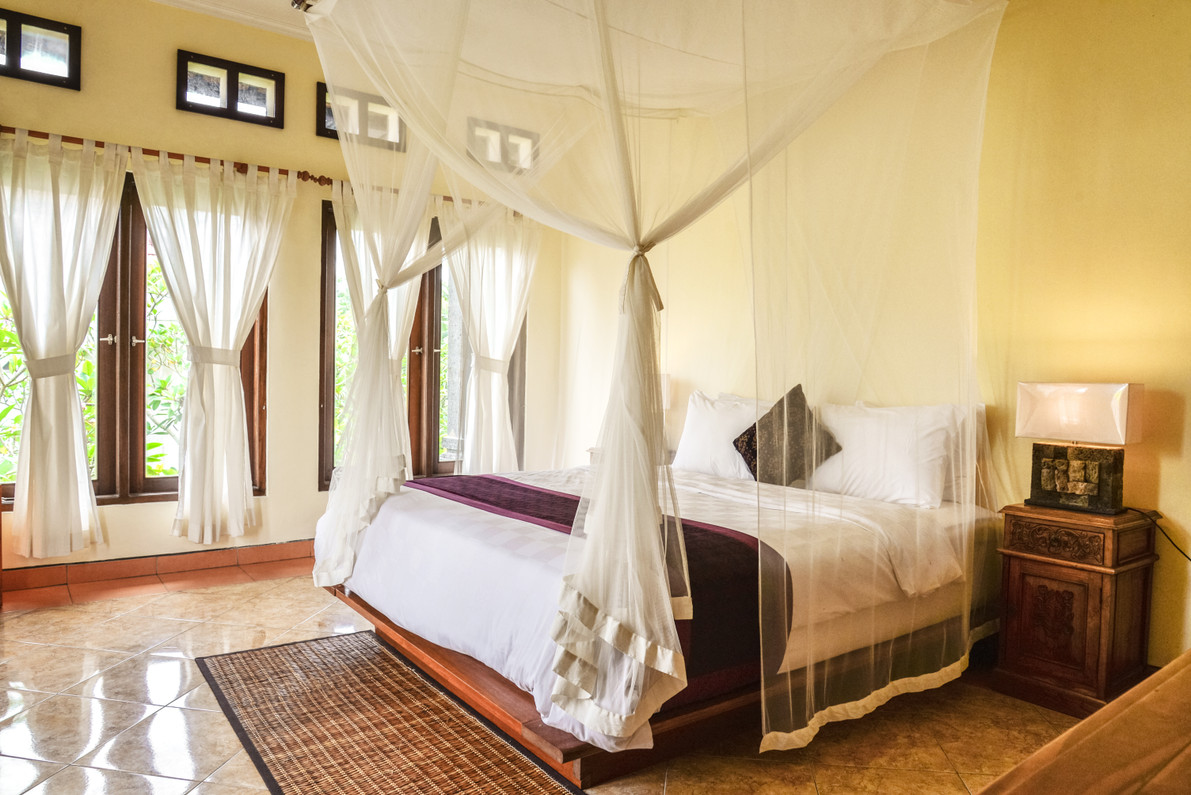
For a permanent bedroom setup, a box or round net hangs over the bed for the whole season and beyond. For travel — the Kimberley trip, the Top End dry-season holiday, the tropical Queensland getaway — a freestanding pop-up or travel net packs down and sets up wherever you're sleeping. And for the nursery, a baby and cot net keeps the netting safely framed away from the child.
Not sure which fabric or size suits your situation? Our cotton vs polyester vs silk fabric guide and bed size guide walk through both, and our full FAQ covers hanging, washing and everything else.
Where to check current warnings
Mosquito activity and disease risk change year to year and month to month. For live information — surveillance results, current warnings, vaccination eligibility — your state or territory health department is the authoritative source. Search for "[your state] health mosquito-borne disease" or "[your state] health arbovirus surveillance," and for northern travel, check the relevant department's Murray Valley encephalitis and Japanese encephalitis advice before you go.
Questions about protecting a particular bed, room, or trip? Contact us — after thirty years we've helped customers in every part of the country work out what suits their situation.
Frank Taylor, Mosquito Net Specialist
Recent Posts
-
Mosquito Season in Australia by State
By Frank Taylor, Mosquito Net Specialist. Last reviewed: July 2026. "When does mosquito season start …21st Jul 2026 -
What Size Mosquito Net Do I Need? An Australian Bed Size Guide
By Frank Taylor, Mosquito Net Specialist. Last reviewed: July 2026. The single most common question …21st Jul 2026 -
Cotton vs Polyester vs Silk Mosquito Nets — An Australian Buyer's Guide
By Frank Taylor, Mosquito Net Specialist. Last reviewed: July 2026. If you're buying a mosquito net …21st Jul 2026